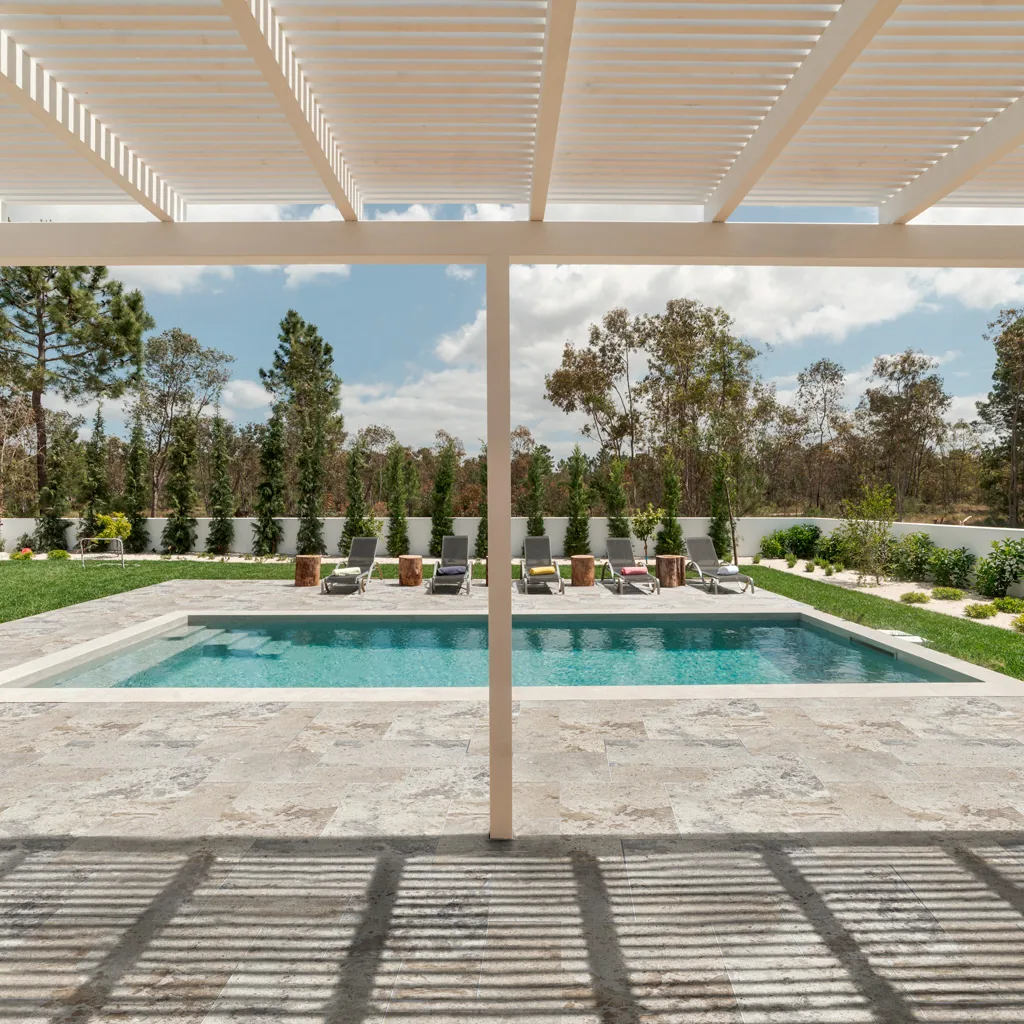
How a pattern set fits together
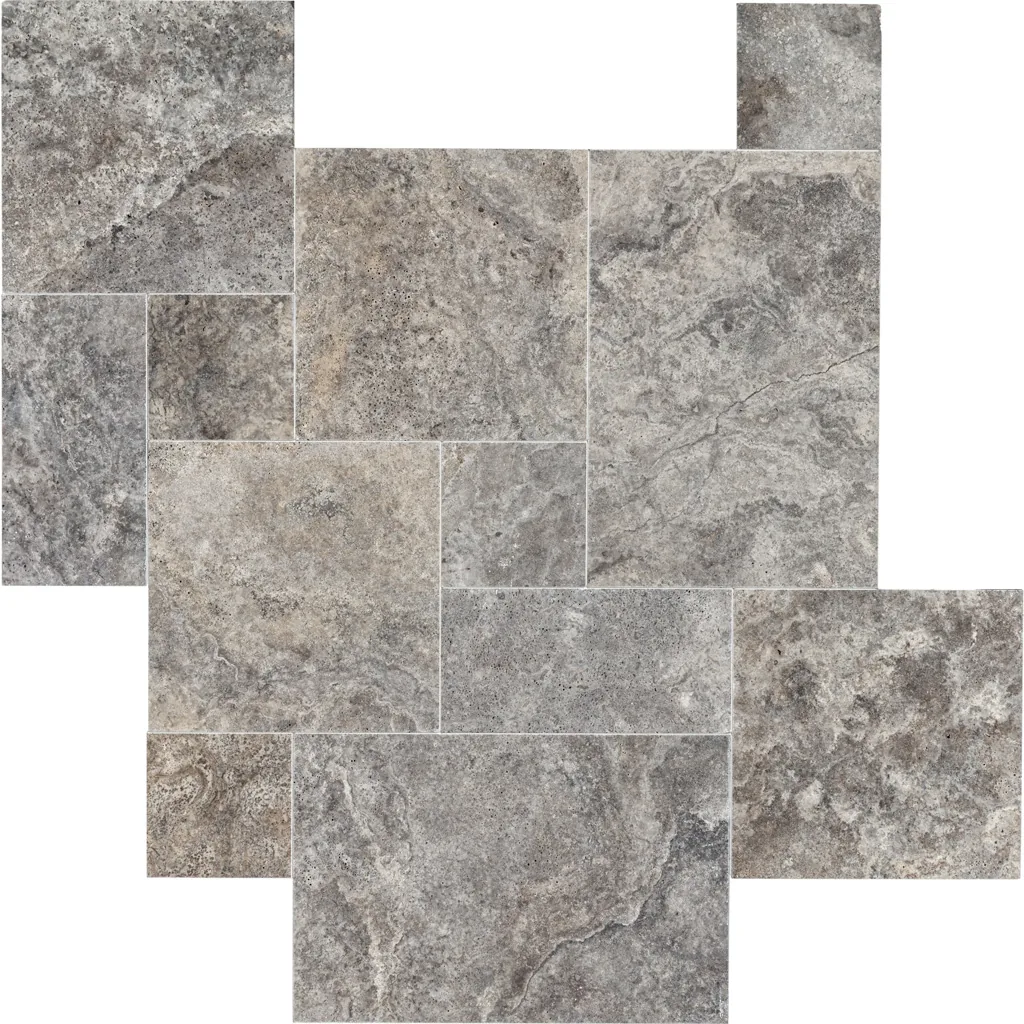
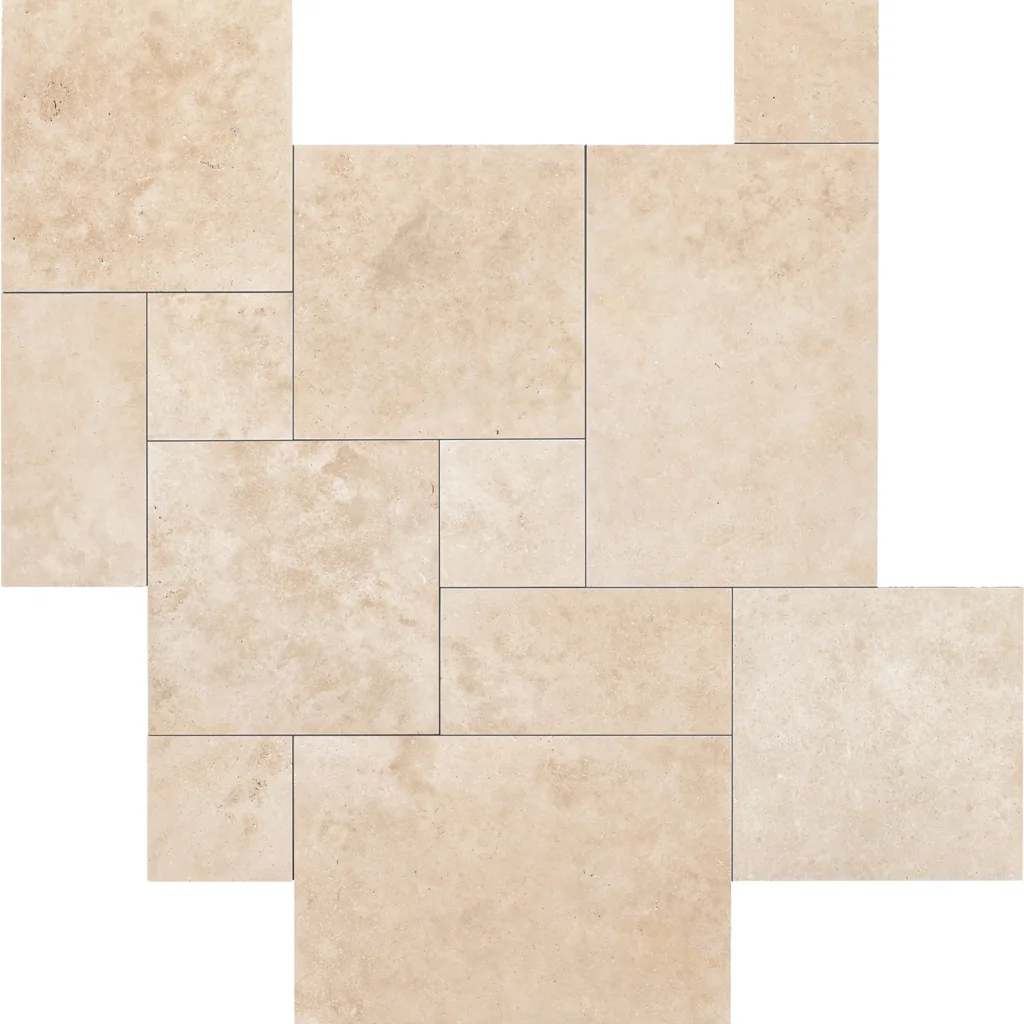
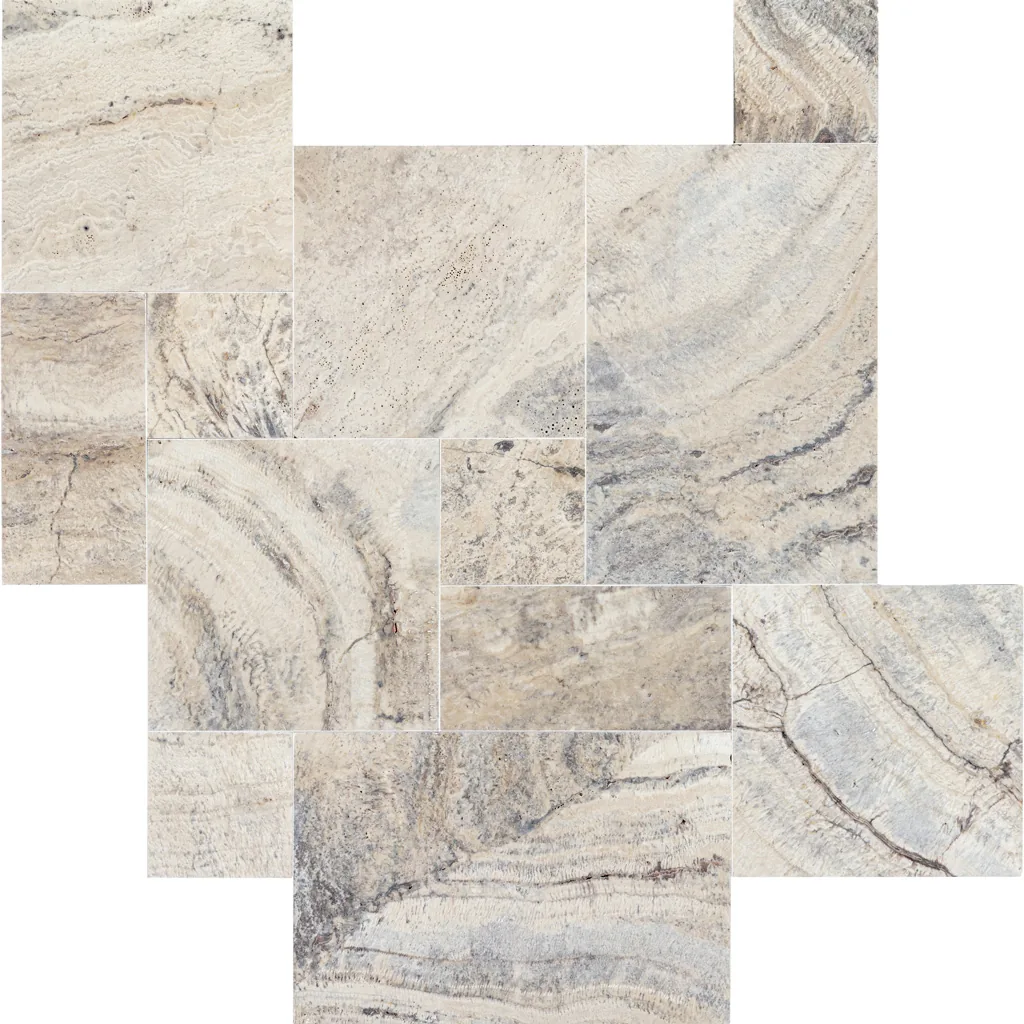
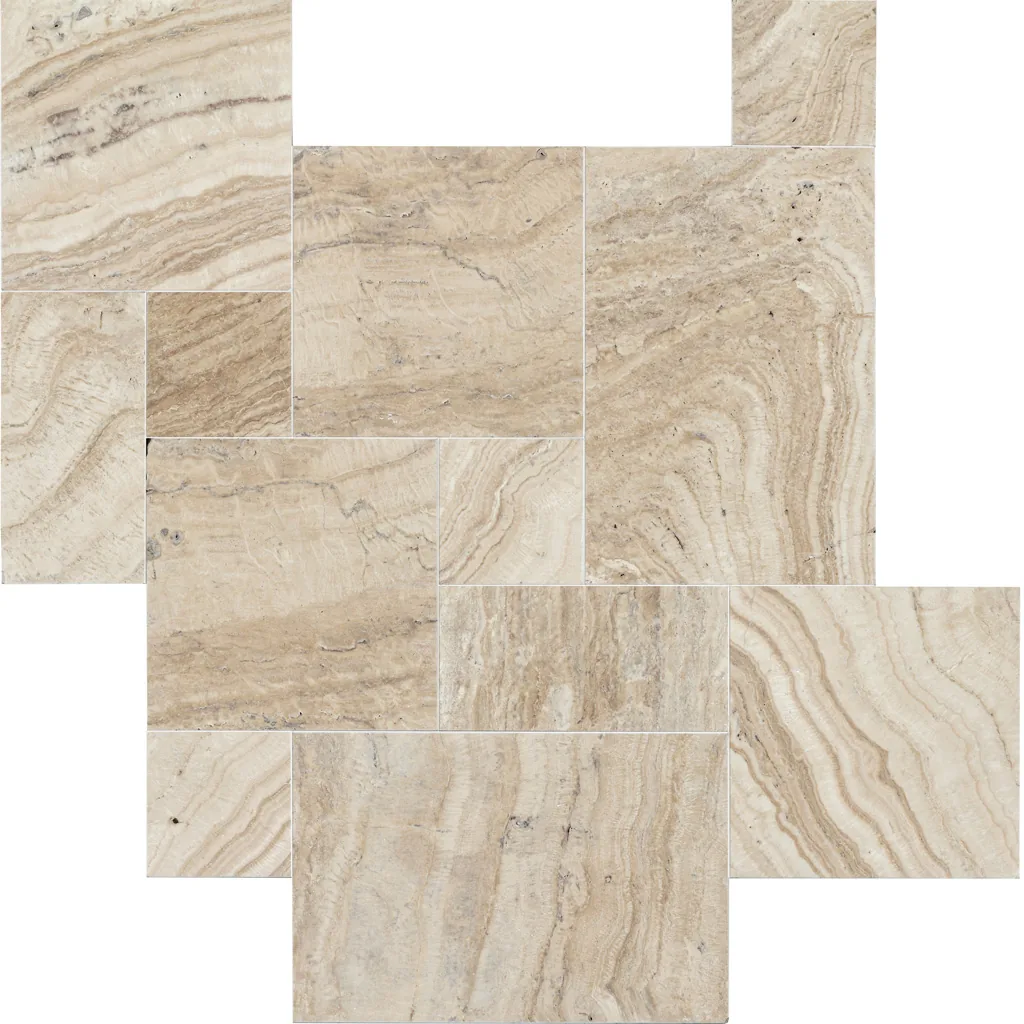
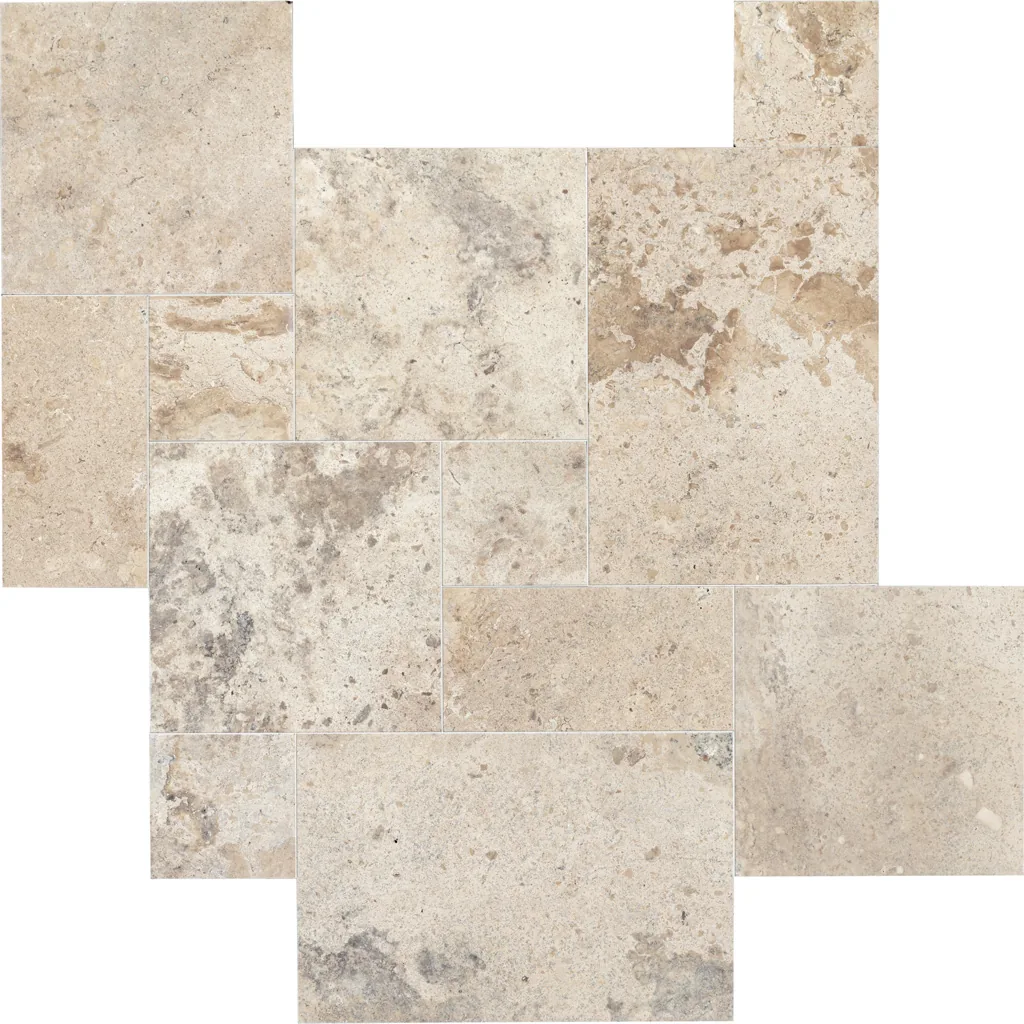
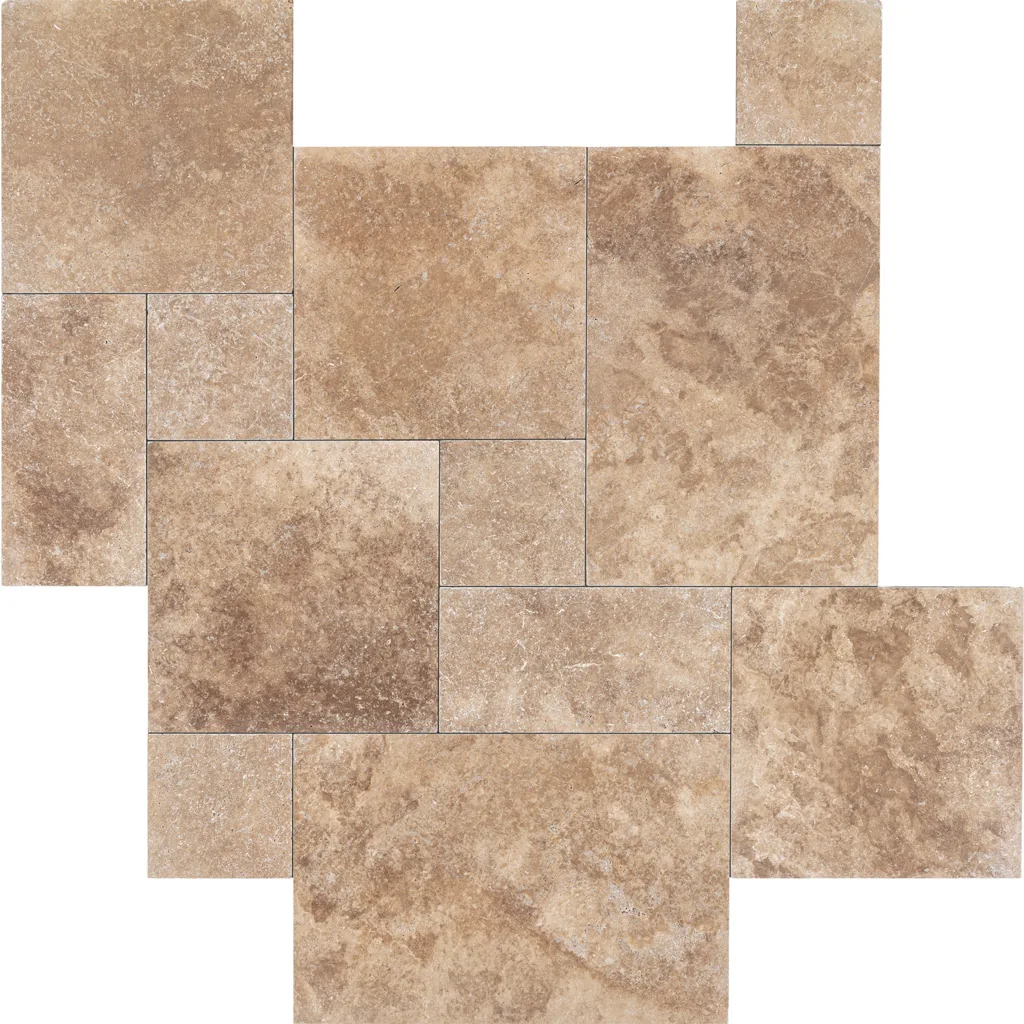
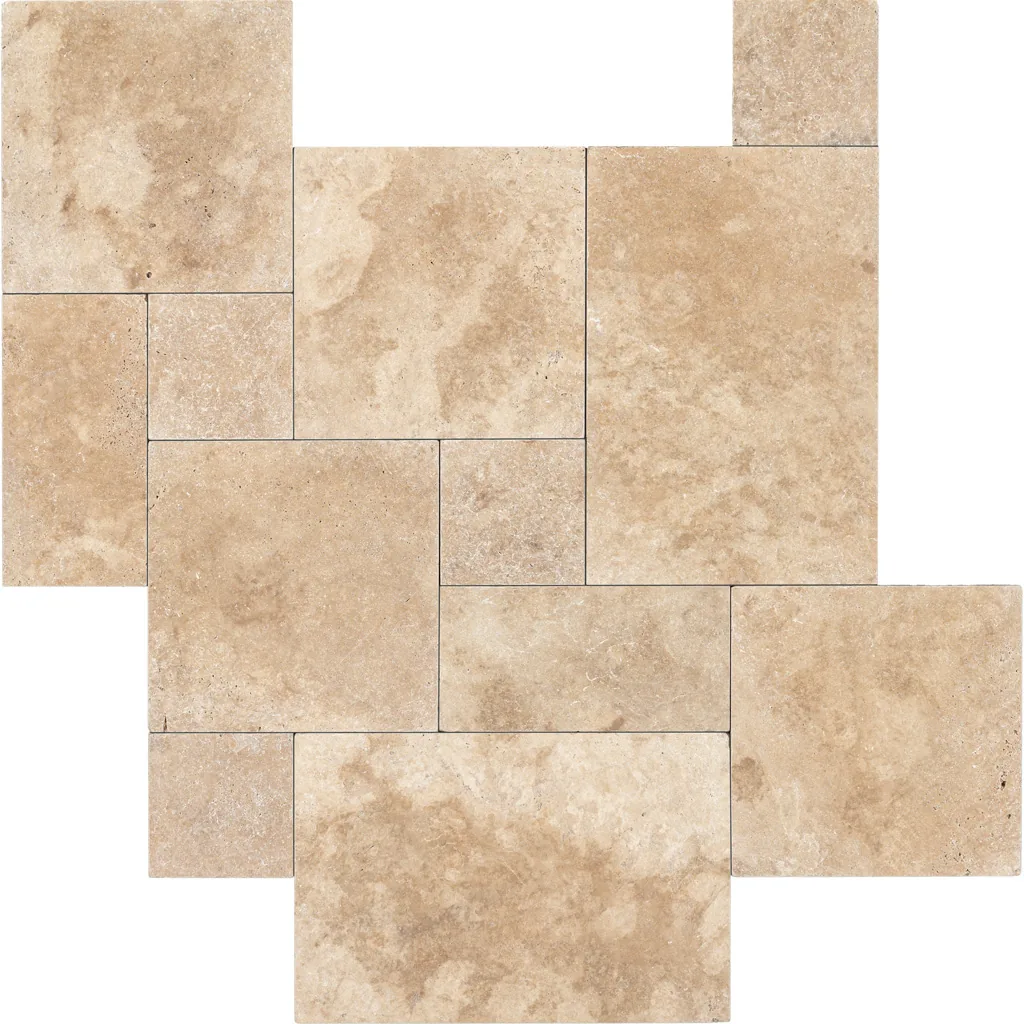
Every piece in a French pattern set is a multiple of one small square. In the sets drawn below that square is 8 inches, so the pieces are 8" x 8", 8" x 16", 16" x 16" and 16" x 24". Because every size shares that grid, the pieces fit together in endless arrangements, and the layout is planned so that no grid shows through.
The exact sizes in a set vary from one quarry to the next. Treat these drawings as examples, and ask us for the breakdown of the set on the ground before your installer plans the real layout.
An example 4 piece layout
Four sizes give the most variation. The large 16" x 24" pieces anchor the pattern, and the small 8" x 8" squares fill the gaps so the joints keep changing direction.
An example 3 piece layout
Dropping the smallest size gives a slightly calmer, more regular look with fewer pieces to handle. Most of our travertines come in both sets. See which of our stones come as sets.
The rules most layouts follow
- Avoid four corners meeting at one point. A plus shaped joint is the giveaway of a pattern that was not planned.
- Avoid long straight joints. A joint that keeps running in a line across the patio reads as a grid. In both drawings above, no straight joint runs longer than four feet.
- Keep the same sizes from sitting side by side, so the large pieces are spread across the area instead of clumping.
- Pull from several pallets at once, so the natural color variation in the stone is spread evenly rather than laid in patches.
Your installer will set the starting point and the direction. These are the things to look for when you check a mockup or the first few rows.
Ordering for a pattern
Order by the square foot and allow extra for cuts, toward ten percent for a French pattern, since the mixed sizes mean more cutting at the edges. Our guide to measuring your project walks through the math.